
AI takes root in university curriculum
More than 12,000 students have returned to classes at EPFL. How has the rise of artificial intelligence transformed higher education?
It’s a siren song for students, a tornado for teachers and an enigma for educational institutions. Artificial intelligence made a splash when it came out in late 2022 and is now a fixture in university studies, forcing schools to rethink their teaching methods and assessment systems. More fundamentally, AI is a reckoning, as it challenges our very conception of knowledge and analytical thinking.
AI offers both promise and peril. It’s an amazing tool that would be silly not to use for certain tasks. But it’s also a shortcut that completely undermines the learning process. The technology is unreliable, biased, opaque and condescending – yet it is ubiquitous, both on and off campus.
In this special report, we examine the impact of AI on our degree programs from the perspective of three different groups – EPFL students, teachers and learning experts. You’ll see that the vast majority of our students use AI, and that our teachers are figuring out ways of working it into their courses. Our School’s learning experts, on the other hand, want to give students “a compass rather than a map,” encouraging them to ask the following question: “Is AI helping me learn, or is it doing the learning for me?”
Study
“Just because something is created using AI doesn't mean it's bad. However, we must remain vigilant about the risks and ethical considerations involved in the design and use of AI.”
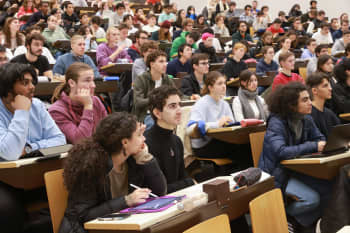
89% of EPFL students surveyed use AI
“It's an incredibly good search engine.”
“It's very handy for asking for proofs or explanations for specific exercises or theorems, for getting hints that don't give away the answers to the exercises, and especially for getting feedback on our proofs or solutions to those exercises.”
Just under 7% use AI rarely,
30% use it several times a day
“I don't use it, but I feel like people often (every time?) bring up AI as a solution to my problems.”
15% always check AI-generated content
“I don't use AI to learn new things, but to reinforce the knowledge I already have, so I use my own methods to verify AI.”
For a good third of people, AI is neither positive nor negative
“I don't know what impact using it has on the course content, and I don't know if I should feel hesitant about making corrections with AI, for example, to ask for explanations.”
Are you concerned about the impact of AI on the world ?
77% of students say they are very or extremely concerned
“The use of AI worries me not only from an environmental perspective, but also from a social one. What scares me is just how ubiquitous and easily accessible AI is now, which makes us forget the consequences that come with it.”
“I'm afraid that AI will 'take over.' I really feel like all the skills we're going to learn throughout our entire education will be completely outdated in a short while and accessible to all ordinary AI'users . I’m afraid we’ll be useless at everything.”
Students’ love-hate relationship with AI
ChatGPT hit like a meteorite in late 2022 and found fertile ground at EPFL, invading the computers and smartphones of tomorrow’s engineers. Within two years, generative AI had spread like wildfire among our students owing to their still-malleable learning habits and the growing number of models – and the many improvements to them.
The good news today is that AI has replaced neither our students’ brains nor their memory. While over 90% of EPFL students use it for their coursework, they do so mainly as a learning tool. For them, it’s a quick and easy way to lighten their workload and expedite large and small tasks such as scheduling their study time, taking notes, completing class assignments, learning from their mistakes, taking practice exams and managing stress. Around three-fourths of these users find it effective for explaining the course material, and two-thirds for helping them solve their weekly homework problems.
How students use AI also depends on their major. Those in computer science, for instance, take a more advanced approach, while those in mathematics are more wary of the models’ statistical predictions.
“If I had the time to look up the information myself instead of asking ChatGPT, I would.”
Those are just some of the key findings of a survey carried out at EPFL by an AI working group made up of the School’s student delegates. The group sent the survey to around 12,00 bachelor’s and master’s students last winter and received 359 replies from a representative sample of the different majors, levels of study.
One finding that some may find reassuring is that 40% of respondents don’t use AI outside of their coursework. And of the 60% who do, it’s mainly “to get answers to questions that come up during the day.”
However, just because students claim to use AI as a learning tool doesn’t mean they do so correctly. To help students make the most of the technology, EPFL’s Teaching Support Center (CAPE) published two handbooks this year. They serve as a compass for students, asking them whether AI is helping them learn or is doing the learning for them. “Our main concern is that students are delegating cognitive tasks, or in other words outsourcing some of the mental effort to a program or machine,” says Olga Kasatkina, a researcher and teaching advisor at CAPE. “We don’t yet have enough experience with AI to determine how it’s affecting the learning process.”
“I feel a little stuck when it comes to using AI. On the one hand, it’s very useful, and most of the time, it helps a lot. On the other hand, I don’t want to use AI because of its energy consumption and environmental impact.
Here’s the dilemma: should I stick to my values, but risk taking much longer to understand the math?”
The survey revealed that students generally have a fairly objective view of AI’s pluses and minuses. They’re aware of its strengths and its potential as a powerful tool when used properly, and they’re worried about its biases, the scope for misuse (such as to polarize debates, infringe upon privacy or breach IT security) and its damaging social and environmental impacts.
The survey also asked students whether they feel pressure to use AI for their coursework. 85% reported feeling little or no pressure. 60% said a teacher had encouraged them to use AI, and one-third of the teachers who did that also described how the technology is affecting various fields. The students’ comments suggest that EPFL faculty members are mostly open to the technology and accept its use for teaching and illustrative purposes, provided that it’s done in an informed, transparent, moderate and responsible way.

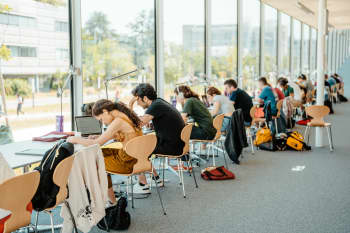
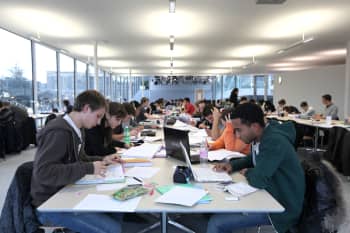
Students' voices
What are your first impressions?
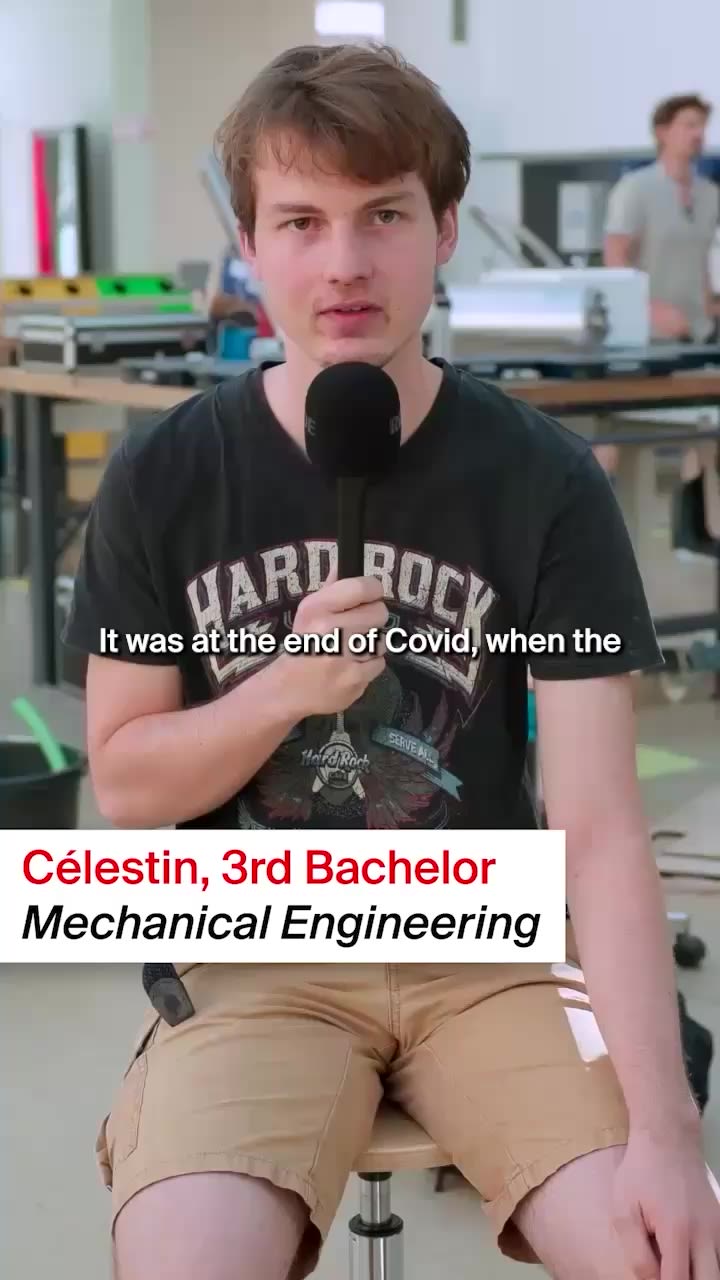
AI: a new way to study?
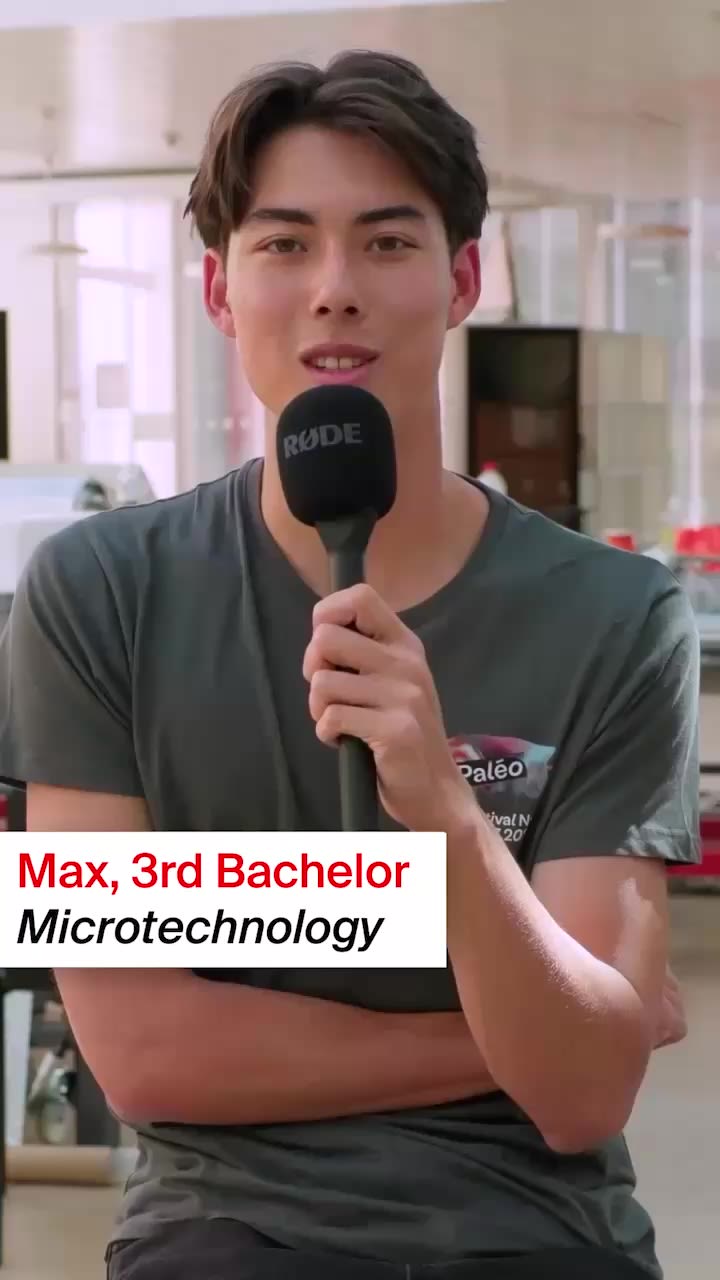
A little suspicious?
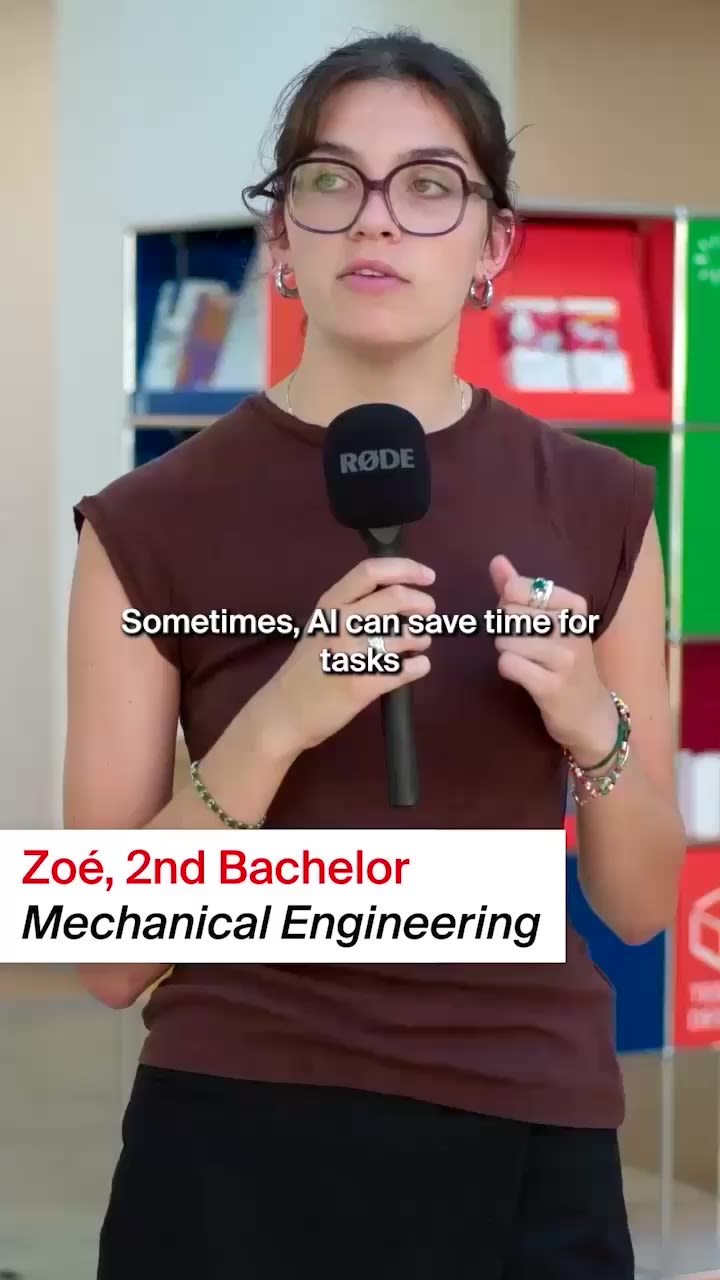
Is using AI cheating?
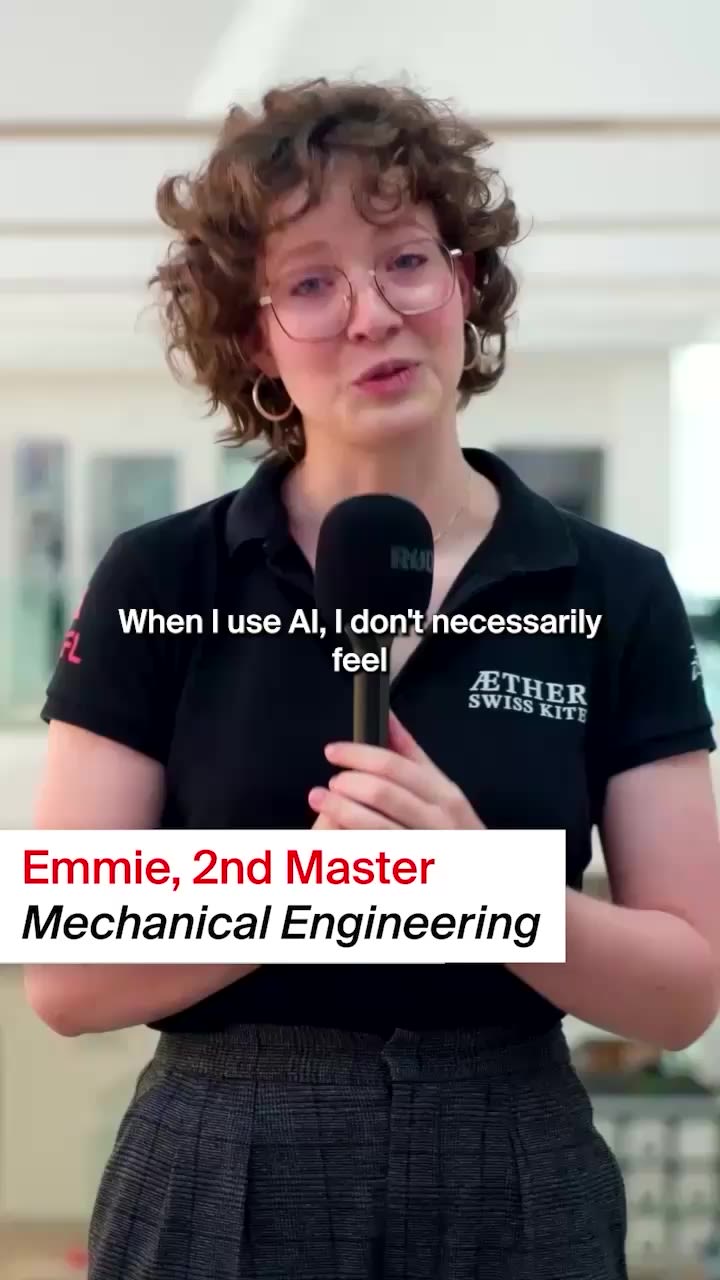
Teach
“Forget about the written assignments to be done at home to test knowledge. You’ll only be reading papers written by AI, with no way of knowing what students have actually learned!”
Learning to use AI effectively instead of banning it
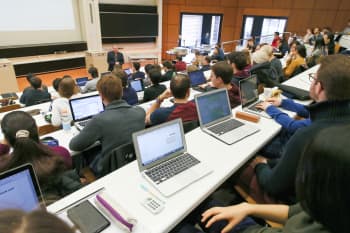
Generative AI is ushering in an entirely new era in education. We spoke with four EPFL teachers about how the technology has impacted the way they’ve been giving their classes this year.
©EPFL/Alain Herzog
©EPFL/Alain Herzog
“It hit like a tornado and is upending both our relationship with students and their relationship with knowledge,” says Jamila Sam, who has been teaching coding for 30 years. In her experience, the arrival of generative AI three years ago was a real watershed moment. “It totally threw my colleagues and me for a loop, and we created a working group to address the issue. We’re starting to flesh out some ideas, such as how we can discuss AI with our students, keep them informed and suggest ways of using it. We’re figuring it out at the same time they are.”
Sam believes that the main problem with AI is that it gives you the impression that you’ve learned something. “The programs lull students into believing they can understand a concept without putting in the effort to follow the thought process all the way through.” She sees that reflected in exams, where students’ grades and skills acquisition are deteriorating, and in the online forums that were created during the pandemic. “Two years ago there were around 2,000 messages, but this year, there have been just 200,” says Sam. “Students seem to be looking for answers elsewhere and not digging any deeper.”
Theatrics and colored chalk
©Lundi13
©Lundi13
Sébastien Basterrechea, a lecturer in mathematics, warns students of the mistakes that AI can make. “For now, I see it as only an additional tool, like MOOCs were a few years ago,” he says. “Before students can properly assimilate a mathematical process, they must have a thorough understanding of it – and that’s not something AI can do for them. This kind of comprehension is what’s tested in exams.”
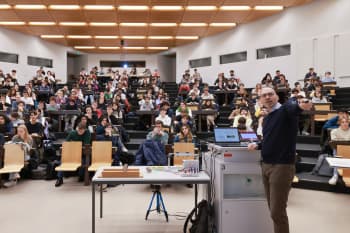
Basterrechea has two secret weapons for keeping students engaged: dynamic, theatrical lectures and colored chalk. “Mine isn’t just a Monday-morning analysis class – it’s the Sébastien Basterrechea show!” he says. “It’s a hard subject, so the least I can do is make it enjoyable.”
Nothing but pen and paper
©Lundi13
©Lundi13
“We’re in the process of fine-tuning the rules,” says Johan Rochel, an EPFL lecturer in the philosophy and ethics of new technology. He believes that generative AI has had a particularly disruptive impact on assessment methods. “We can forget about testing students with written assignments to be completed at home. All we would get are essays written by AI, and we wouldn’t know what the students actually grasped.” He believes the key is for teachers to be clear on what skills students are expected to acquire in their class. “Then they can use that as a starting point for deciding which teaching and assessment methods to use and what tools can be brought in.”
Rochel focuses his own classes on in-person lectures complete with case studies, teamwork and discussions. “From a teaching perspective, there are huge benefits to having people sit at the table and discuss things face to face,” he says. His exams are administered the old-fashioned way: two hours in a classroom with only a pen, paper and some written materials – but no internet.
In Rochel’s view, the main risk regarding AI is that skills will be handed over to machines. “If we automate critical tasks, what will happen if there are no more computers? Consistently turning to AI can encourage people to take the easy way out, leading to a loss of skills and AI dependency.” Learning to always check the facts and think critically is essential, but not always enough. “AI programs are designed to hit us where we’re vulnerable and short on time,” says Rochel.
Enhancing human capabilities
Ken Holstein recently joined EPFL and is working specifically to reshape how emerging technologies are designed and used. He heads EPFL’s Co-Augmentation, Co-Learning, and Collaborative AI Lab (CoALA), which develops AI systems that aim to enhance human capabilities – such as thinking, learning, collaborating, reasoning and communicating – rather than simply automating tasks.
Holstein advocates for systems designed in collaboration with those who will use or be impacted by them – these users could be workers, local community members, teachers or students – based on their specific needs. “AI cannot be a one-size-fits-all solution,” he says. “When companies try to deploy the same AI systems globally for very different cultural, organizational and educational contexts, we often see clashes with local needs and values.”
He cites two major challenges in education. The first is that educational institutions sometimes fail to sufficiently involve experts in technology adoption decisions. Under pressure not to “miss the boat,” schools may end up adopting technology solutions that are not well-aligned with students’ learning needs or with teachers’ instructional needs. The second challenge is that faculty members must design activities and assessments that make it hard for students to simply “outsource” the cognitive effort required for learning to a generative AI system. “In addition, it’s also important to help students deeply understand why outsourcing certain tasks to AI will prevent them from developing the forms of human judgment and expertise that will be most critical in an AI-augmented world,” says Holstein.
Teachers' voices
“Some students mistakenly believe they can rely on these tools instead of building strong programming skills.”
©EPFL/Alain Herzog
©EPFL/Alain Herzog
“These technologies are developing so rapidly that by the time we realize the potential of one, another one is already on the horizon. As a teacher, it’s hard to keep up and develop a set of teaching tools that will allow us to adapt.”
©EPFL/Alain Herzog
©EPFL/Alain Herzog
“The human brain simply isn’t designed to assimilate so much information. Using this kind of new technology without a solid understanding of the fundamentals is a little like building a skyscraper on a wobbly foundation.”
©EPFL/Alain Herzog
©EPFL/Alain Herzog
“I have noticed that students incorporate new technology – like the latest artificial intelligence models – much more readily into their projects.”
AI in Education: 👍 or 👎
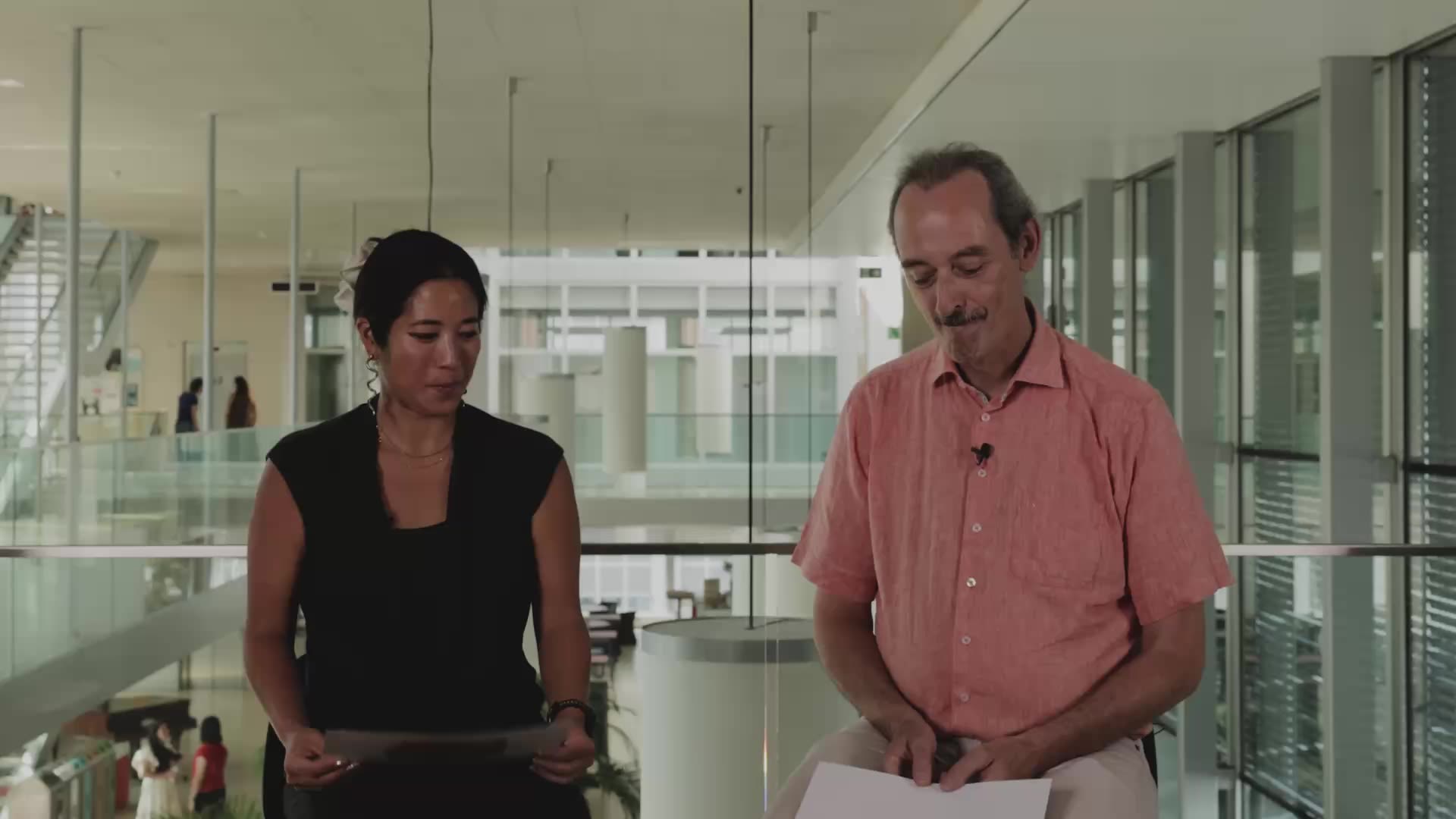
Nako Nakatsuka, an assistant professor at EPFL’s Chemical Nanotechnology Laboratory, and Francesco Mondada, academic director of EPFL’s Center for Learning Sciences, answer our questions about the rise of AI in education.
By Cécilia Carron
Guiding
“AI is forcing us to rethink how we teach students, assess their capabilities and structure our degree programs.”
The big reckoning, since AI has all the answers
AI is upending our entire educational system, from grade school to university. The technology is both valued and feared, and it’s forcing teachers to think long and hard about the kind of education they want to deliver and the key skills that students should acquire. “What do we still want to be able to do if there were no more electricity?” says Patrick Jermann, the executive director of EPFL’s Center for Digital Education (CEDE). “AI is forcing us to rethink how we teach students, assess their capabilities and structure our degree programs. How students learn is shaped largely by how we evaluate their skills.”
One way EPFL is addressing these concerns is through the S’ÉPanouir-FLourish strategic initiative, which involves adapting the School’s degree programs to give students “a compass rather than a map.” The goal is to equip students with a lasting foundation of knowledge and skills, the ability to adapt to change, and an awareness of social impact. This also includes setting aside more time in degree programs for students to reflect, nurture their creativity and interact with their peers. Learning something properly takes time – and the process can’t be delegated to AI.
©EPFL/Joachim Steiner
©EPFL/Joachim Steiner
“What do we still want to be able to do if there were no more electricity?”
AI as a Training Partner
“Chatbots powered by large language models make us feel like we’re learning something because they explain things really well – but understanding a concept isn’t the same as learning it,” says Kim Uittenhove, a scientist at EPFL’s Center for Learning Sciences (LEARN). “Unless we make an effort, our cognitive system doesn’t get the message that it needs to store the information. Learning is an active process. Every task we delegate to AI, like summarizing an article, gives us one fewer opportunity to build our thinking skills. When we passively accept whatever an AI program churns out, we add to the problem because we lose control of the process.”
To get a better idea of how EPFL students are using AI, Uittenhove ran a study with 20 participants and found they often don’t use the technology in a way that reinforces learning. “We saw that even when students start with good intentions, the chatbot sometimes takes over and does things for them – even without being asked to,” she says. That’s a problem because studies have shown that students who use AI in this way may perform less well on assessments.
The best approach for preventing AI from hijacking the learning process is to use it as a sparring partner, such as by having it simulate an oral exam or asking it for feedback on your work. EPFL professor Ola Svensson has designed a chatbot that functions like this. It asks questions instead of giving answers, requiring students to make an effort to explain things, which encourages learning. Another example is an argumentative chatbot developed by Francesco Mondada, the academic director of LEARN. His program asks students to explain their reasoning and justify their answers, even correct ones. For its part, CEDE has created AI tutors and software that students can use to get clues as they complete their class assignments. “I would add that our AI programs were developed on local infrastructure using an approach that’s responsible in terms of both ethics and sustainability – we selected models that require as little power as possible,” says Jermann.
Rethinking assessment criteria
One of the biggest challenges currently facing our educational system is keeping students motivated, since AI programs can do the work for them and perform well, whether in engineering or in literature. “Until recently, we delegated to machines whatever tasks they could do for us. But now, the decision of whether to delegate a task depends on how interesting we find that task and if it will help us grow,” says Rudolf Mahrer, an EPFL and University of Lausanne professor of linguistics who co-teaches a class on writing and thinking with generative AI. “This is a paradigm shift, and it’s giving us a great opportunity to think about the skills we have, the meaning behind what we learn, and our relationship to technology. But it also risks lulling us into a ‘Prometheus complex’ where we lose confidence in our own capabilities relative to those of a machine. Yet we need that confidence in order to further our education and embark on life’s journey.”
At EPFL, Mahrer is part of a working group that’s examining how the School can best update its assessment methods. “In my opinion, our suggestions for teaching and assessment should be guided by the goal of maintaining a climate of trust between teachers and students,” he says. “Students need to be able to say to themselves: ‘When I’m in school or at university, I’m a human being who’s making progress alongside other human beings who will be affected by my future.’ AI is everywhere, and sometimes we use it without even knowing it. We should therefore give up trying to detect it and stop viewing it as only a cheat. Instead, we should focus on finding the best way to assess students’ skills. Their knowledge can be evaluated using written, in-class exams with very little supporting documentation, or through assignments they complete at home supplemented by a written or oral component in class where they have to explain their approach.”
Just as it’s not in students’ interest to have AI take over the learning process, teachers must be wary of the risks associated with using AI for assessment, as Uittenhove points out. “I searched the literature on this topic and found that biases can emerge when AI is used in grading systems. For instance, some studies have shown that AI gives higher grades to answers that are longer, even if they contain information unrelated to the question that was asked. So schools must be very careful when using these systems and include human experts in the loop – especially to prevent students from adopting ways of thinking that are intended simply to earn AI approval.” Because one thing is clear: regardless of how our educational system evolves, that’s not a skill universities want to teach their future graduates.
©EPFL/Joachim Steiner
©EPFL/Joachim Steiner
“AI is everywhere, and sometimes we use it without even knowing it. We should therefore give up trying to detect it and stop viewing it as only a cheat. Instead, we should focus on finding the best way to assess students’ skills.”
©EPFL/Joachim Steiner
©EPFL/Joachim Steiner
“Learning is an active process. Every task we delegate to AI, like summarizing an article, gives us one fewer opportunity to build our thinking skills.”
Comic Strip
By Nik Papageorgiou | The Upturned Microscope
© Nik Papageorgiou
© Nik Papageorgiou
Nik Papageorgiou
Nik Papageorgiou
Build
"We need human connection."
A Campus in Transition
The heart of EPFL's Lausanne campus has been under construction since summer 2025.
A new building is currently under construction at the Esplanade. As part of this project, the Coupole will undergo extensive renovations.
Called "Double Deck," the project will create 1,500 seats in modular auditoriums.
It reflects the importance that EPFL continues to place on interactions between faculty and the student body.
The movable walls in the classrooms will accommodate different class sizes depending on need, while the collaboration-friendly design of the furniture and acoustics will ensure that students will be able to use the auditoriums as study spaces when they are not in use for classes.
Numerous areas designed for individual or group work will be set up.
The project, which will breathe new life into the Esplanade without having a major impact on the landscape, is being carried out under the direction of architect Dominique Perrault.
 Built with Shorthand